December theme: Religion 📿
Introduction
*bʰewdʰ- vs. *gʷʰedʰ-: two families that end up being super confusing in Germanic languages, since *bʰ and *gʷʰ merge at the beginning of a word. In English, they end up being homophones with complementary/opposite meanings: "offer" vs. "ask for".
I had to do these two at the same time just to make sure I was tracking which words go where, because the dictionaries and other sources sometimes also mix them up. Even in the rest of the Germanic langauges where the two English bid s aren't complete homonyms the meanings can get awfully confusing; compare German bitten, to ask someone to do something (bid) vs. ver-bieten, to ask someone _not_ to do something (forbidden).
They probably don't have a common derivation. Probably. If they do, it's before reconstructable language.
Also, Happy Bodhi Day (Japanese Calendar variant).
Teaser
bid, forbid, Buddha, bid, bead, geas
Full Text
-
Proto-Indo-European *gʷʰedʰ- to request, pray, ask for
-
Proto-Indo-European *gʷʰédʰyeti to be praying, to be asking for
-
Balto-Slavic
-
Lithuanian gedė́ti to mourn
- Lithuanian gedė́jimas mourning (noun)
-
Slavic *žę̄dàti to wish, to desire
-
East Slavic жѧдати žędati
- Russian жада́ть žadátʹ crave, thirst for (archaic)
-
South Slavic
- Old Church Slavonic жѧдати žędati to thirst, to desire
-
West Slavic
- Polish żądać to demand
-
-
-
Celtic *gʷedyeti to pray
-
Brythonic
- Welsh gweddïo to pray
-
Old Irish guidid to pray
- Irish guigh to pray
-
-
Germanic *bidjanã to request, to ask for
-
East Germanic
-
Gothic 𐌱𐌹𐌳𐌾𐌰𐌽 bidjan to request, to ask, to pray, to beg
- Gothic 𐌱𐌹𐌳𐌰𐌲𐍅𐌰 bidagwa beggar
-
-
North Germanic
-
Old Norse biðja to ask, to beg, to request, to pray
- Danish bede to ask, to beg, to request, to pray
- Icelandic biðja to ask, to request, to pray
-
-
West Germanic
-
Old English biddan to ask for, to entreat, to beg, to demand
- English bid [1]
-
Frankish
- Dutch bidden to pray
-
Old High German bitten to ask
- German bitten to ask, to plead, to beg, to request
-
-
-
Indo-Iranian
-
Iranian
- Avestan jaiδiiemi
-
Western Iranian
- Old Persian 𐎩𐎮𐎡𐎹𐎠𐎷𐎡𐎹 ja-di-i-y-a-mi-i-y I pray
-
-
-
Proto-Indo-European *gʷʰedʰeh₂ noun derivation
-
Balto-Slavic
-
Slavic *žęďa thirst, craving, wish, desire
- East Slavic жажа žaža
-
South Slavic
-
Old Church Slavonic жѩжда žjęžda
- Russian жа́жда žážda thirst, craving
- Serbo-Croatian же̑ђ(а) žȇđ(a) thirst
-
-
West Slavic
- Polish żądza lust, craving
-
-
Germanic *bedō a request, a prayer, a plea
-
East Germanic
- Gothic 𐌱𐌹𐌳𐌰 bida request, prayer, plea
-
West Germanic
-
Old English bedu request, prayer, religious worship
-
Old English Bīeda personal name
- English (Saint) Bede (the Venerable)
- English bead [2]
- Scots bede prayer, rosary
-
-
Frankish
- Dutch bede plea
-
Old High German bita request, inquiry
- German Bitte request
-
-
Germanic *bedōną to pray
-
West Germanic
-
Old High German betōn to pray
- German beten to pray
-
-
-
-
-
Proto-Indo-European *gʷʰédʰtis abstract action noun
-
Proto-Armenian *god-i-
- Old Armenian գոթի gotʿi worship, sorcery
-
Celtic *gʷeddis
-
Brythonic
- Welsh gweddi prayer
-
Old Irish geis curse, taboo
- Irish geis magical injunction, spell, prohibition, taboo
-
Scottish Gaelic geas
- English geas
-
-
-
Proto-Indo-European *gʷʰodʰyeh₂
-
Celtic
-
Old Irish guide prayer
- Irish guí prayer
-
-
-
Proto-Indo-European *gʷʰedʰos action or result noun
-
Hellenic
-
Classical Greek πόθος póthos longing, regret, desire unrelated to páthos of similar meaning
- Greek πόθος póthos longing, regret, desire
-
-
-
-
Proto-Indo-European *bʰewdʰ- to be awake, to be aware
-
Proto-Indo-European *bʰéwdʰeti being awake, being aware
-
Balto-Slavic *bljaustei
-
Slavic *bljustì to watch
-
East Slavic
- Russian блюсти́ bljustí to guard, to keep, to watch over
-
South Slavic
- Old Church Slavonic блюсти bljusti
- Serbo-Croatian бљу̏сти bljȕsti
-
-
-
Germanic *beudanã to offer, to bid, to command?
-
West Germanic
-
Old English bēodan to offer, to give, to announce
- English bid [1]
-
Old English Bīeda personal name
- English (Saint) Bede (the Venerable)
-
Old High German biotan to offer
- German bieten to offer, to present, to bid
-
-
Old Norse bjóða
- Danish byde to order, to command, to invite, to offer
- Icelandic bjóða to offer, to invite, to command
-
East Germanic
- Gothic *biudan
-
Germanic *furibeudaną to forbid, to command against
-
West Germanic
-
Old English forbēodan to forbid, to restrain
- English forbid
-
Old High German firbiotan
- German verbieten to forbid, to prohibit
-
-
Old Norse fyrirbjóða
- Danish forbyde to disallow, to forbid, to ban
-
East Germanic
- Gothic 𐍆𐌰𐌿𐍂𐌱𐌹𐌿𐌳𐌰𐌽 faurbiudan to forbid
-
-
-
Hellenic *péutʰomai
-
Classical Greek πεύθομαι peúthomai
- Classical Greek πυνθάνομαι punthánomai
-
-
Indo-Iranian
-
Indo-Aryan
-
Sanskrit 𑀩𑁄𑀥𑀢𑀺 bódhati to wake, to know, to understand
-
Magadhi
- Bengali বোঝা bojha to understand
-
-
-
Iranian
- Avestan baoδaiti
-
Western Iranian
- Persian بیدار bīdār awake
-
-
-
Proto-Indo-European *bʰudʰtós one who has awoken, one who is known
-
Hellenic
- Classical Greek πυστός pustós known, familiar, famous
-
Indo-Iranian
-
Indo-Aryan
-
Sanskrit 𑀩𑀼𑀤𑁆𑀥 buddha awoken, enlightened, the Buddha
-
Sauraseni
-
Pali Buddha the enlightened one, the Buddha
- Thai พุทธ pút Buddha
-
Middle Chinese 佛陀 bɨutdɑ Buddha
- Mandarin 佛 Fó Buddha
- Japanese ぶつだ Butsuda Buddha
- Korean 부처 Bucheo Buddha
-
Sogdian bwt the Buddha, statue of the Buddha
-
Persian بت bot idol, Buddha statue
- Hindi बुत but idol, statue, fetish
-
Persian بتخانه bot-khāne temple, shrine lit. "idol-house"
- Hindi बुत-ख़ाना but-khānā temple, pagoda
-
-
- English Buddha
- Hindi बुद्ध buddh Buddha
- Telugu బుద్ధుడు buddhuḍu wise person, sage, enlightened person, the Buddha
-
-
-
Iranian
- Avestan busta realized, oberved
-
-
-
Proto-Indo-European *bʰowdʰéyeti to make aware, to awaken causative imperfective
-
Balto-Slavic *baudeitei
- Lithuanian báudyti incite, instigate, to encourage
-
Slavic *buditi to awaken, to rouse
-
East Slavic
- Russian буди́ть budítʹ to wake up, to awaken
-
South Slavic
- Serbo-Croatian бу́дити búditi to awaken, to rouse, to begin (of an era, etc.)
-
West Slavic
- Polish budzić to awaken
-
-
Indo-Iranian
-
Indo-Aryan
- Sanskrit 𑀩𑁄𑀥𑀬𑀢𑀺 bodhayati to awaken, to restore to life or consciousness, to cause to observe
-
Iranian
- Avestan baodaiieiti
-
-
-
Proto-Indo-European *bʰudʰis awareness, awakeness, knowledge
-
Indo-Iranian
-
Indo-Aryan
-
Sanskrit 𑀩𑁄𑀥𑀺 bodhi perfecent knowledge, englightenment, bodhi
-
Pali 𑀩𑁄𑀥𑀺 bodhi perfect knowledge, englightenment, bodhi
-
Middle Chinese
- Mandarin 菩提 pútí bodhi
- Japanese ぼだい bodai bodhi
- Korean 보리 bori bodhi
- Thai โพธิ poo-tí bodhi
-
- English bodhi
-
Sanskrit 𑀩𑁄𑀥𑀺𑀲𑀢𑁆𑀢𑁆𑀯 bodhi-sattva one on the way to enlightenment, Buddhist saint, bodhisattva
-
Pali bodhisatta bodhisattva
- Arshian bodʰisattu bodhisattva
-
Middle Chinese 菩提薩埵 buo dei sɑt tuɑh bodhisattva
- Mandarin 菩薩 púsà bodhisattva
- Japanese ぼさつ bosatsu bodhisattva
- Thai โพธิสัตว์ poo-tí-sàt bodhisattva
- English bodhisattva
-
-
-
-
-
-
Proto-Indo-European *bʰudʰyétor
-
Indo-Iranian
-
Indo-Aryan
-
Sanskrit 𑀩𑀼𑀥𑁆𑀬𑀢𑁂 búdhyate to wake, to know, to understand
-
Magadhi
- Bengali বোঝা bojha to understand
-
-
-
Iranian
- Avestan būiδiiaēta they should be taught
-
-
-
Proto-Indo-European *bʰudʰéh₁yeti to be particularly awake? intensive imperfective
-
Balto-Slavic *budeʔtei
- Lithuanian budė́ti to be awake, to watch, to be on duty
-
Slavic *bъděti
-
East Slavic бъдѣти bŭděti
- Russian бдеть bdetʹ to keep watch, to keep vigil dated, literary
-
South Slavic
- Old Church Slavonic бъдѣти bŭděti to watch over, to keep vigil
- Serbo-Croatian бде̏ти bdȅti to watch over, to keep vigil
-
West Slavic
- Czech bdít to be awake, to watch over
-
-
-
Proto-Indo-European *bʰowdʰos
-
Celtic *bowdos
-
Celtic *ɸrobowdos with *ɸro-: "fore-, pro-"
-
Brythonic
- Welsh rhybudd warning, advice, notice
- Old Irish robud forenotice
-
-
-
Indo-Iranian
-
Indo-Aryan
-
Sanskrit 𑀩𑁄𑀥 bodha
-
Sauraseni
-
Madhya Sauraseni
- Hindi बोध bodh insight, knowledge, perception, congition
-
-
-
-
Iranian
- Avestan baoda
-
-
Tocharian *pāut-
- Arshian pot- to honor, to flatter
-
Kushean paut- to honor, to flatter
- Kushean pauto honor, flattery
-
-
Proto-Indo-European *bʰéwdʰtis abstract action noun
-
Balto-Slavic
- Lithuanian bùsti wake up, wake
-
Hellenic
- Classical Greek πῠ́στῐς pústis inquiry, question, news, report
-
Indo-Iranian
-
Indo-Aryan
-
Sanskrit 𑀩𑀼𑀤𑁆𑀥𑀺 buddhi intelligence, reason, intellect
-
Madhya Sauraseni
- Hindi बुद्धि buddhi intelligence
-
-
-
Iranian
- Avestan busti
-
-
-
Proto-Indo-European *bʰudʰo
-
Celtic *budos
-
Brythonic
- Welsh bodd free will, consent
-
-
Germanic *budã offer, message
-
West Germanic
-
Old English bod command, order, mandate
- English bode
-
-
Old Norse boð
- Danish bud command, message, guess
- Icelandic boð message, order, offer, omen
-
Old Norse umboð commission
-
Old Norse umboðsmaðr commissary, representative, steward
- Icelandic umboðsmaður representative, attorney, agent
-
Swedish ombudsman ombudsman
- English ombudsman
-
-
Germanic *budô messenger
-
West Germanic
-
Old English boda messenger, envoy, apostle, angel, prophet
- English bode
-
Old High German boto messenger, envoy
-
German Bote messenger, letter carrier, apostle
- German Botschaft news, tidings, embassy
-
-
-
-
Germanic *budilaz messenger, herald, bearer of an order
-
West Germanic
-
Old English bydel herald, warrant officer, announce, preacher
- English beadle
- Scots bedel attendant to a minister
-
Old High German butil
- German Büttel court officer, policeman, menial
-
Frankish *budil
- Dutch beul executioner, torturer, cruel person
-
Medieval Latin bedellus
- French bedeau attendant at a church, caretaker of a church
- Italian bidello caretaker, janitor
- Spanish bedel janitor
-
-
-
Germanic *budōnã to proclaim, to announce, to instruct
-
West Germanic
-
Old English bodian announce, foretell, preach
-
English bode
- English forebode
-
-
-
-
-
Indo-Iranian
-
Indo-Aryan
-
Sanskrit 𑀩𑀼𑀥 budha Mercury (planet), Puranic Hindu divinity associated with intellect, wit, communication, trade, and the planet Mercury
-
Magadhi
- Bengali বুধ budh Mercury (planet)
-
Sauraseni
-
Madhya Sauraseni
- Hindi बुध budh Mercury (planet)
-
Pali
- Mongolian Буд Bud Mercury (planet)
-
Thai ดาวพุธ daao-put Mercury (planet), Budha (Hindu deity)
- Thai วันพุธ wan pút Wednesday
-
- Telugu బుధుడు budhuḍu Mercury (planet)
-
Sanskrit 𑀩𑀼𑀥𑀯𑀸𑀭 budhavāra Wednesday Mercury's day [4]
-
Elu
- Sinhala බදාදා badādā Wednesday
-
Magadhi
- Bengali বুধবার budhbar Wendesday
-
Sauraseni
-
Madhya Sauraseni
- Hindi बुधवार budhvār Wednesday
-
- Telugu బుధవారము budhavāramu Wednesday
-
-
-
-
-
-
Proto-Indo-European *bʰudʰrós wakeful adjective
-
Balto-Slavic *budras
- Lithuanian budrùs vigilant
-
Slavic *bъ̀drъ alert, cheerful
-
East Slavic
- Russian бо́дрый bódryj cheerful, brisk, vivacious
-
South Slavic
- Serbo-Croatian бо̏дар bȍdar alert, brisk, keen, strong
-
-
Indo-Iranian
-
Iranian
-
Avestan *budra
- Avestan zaēnibudra
-
-
-
-
Visual
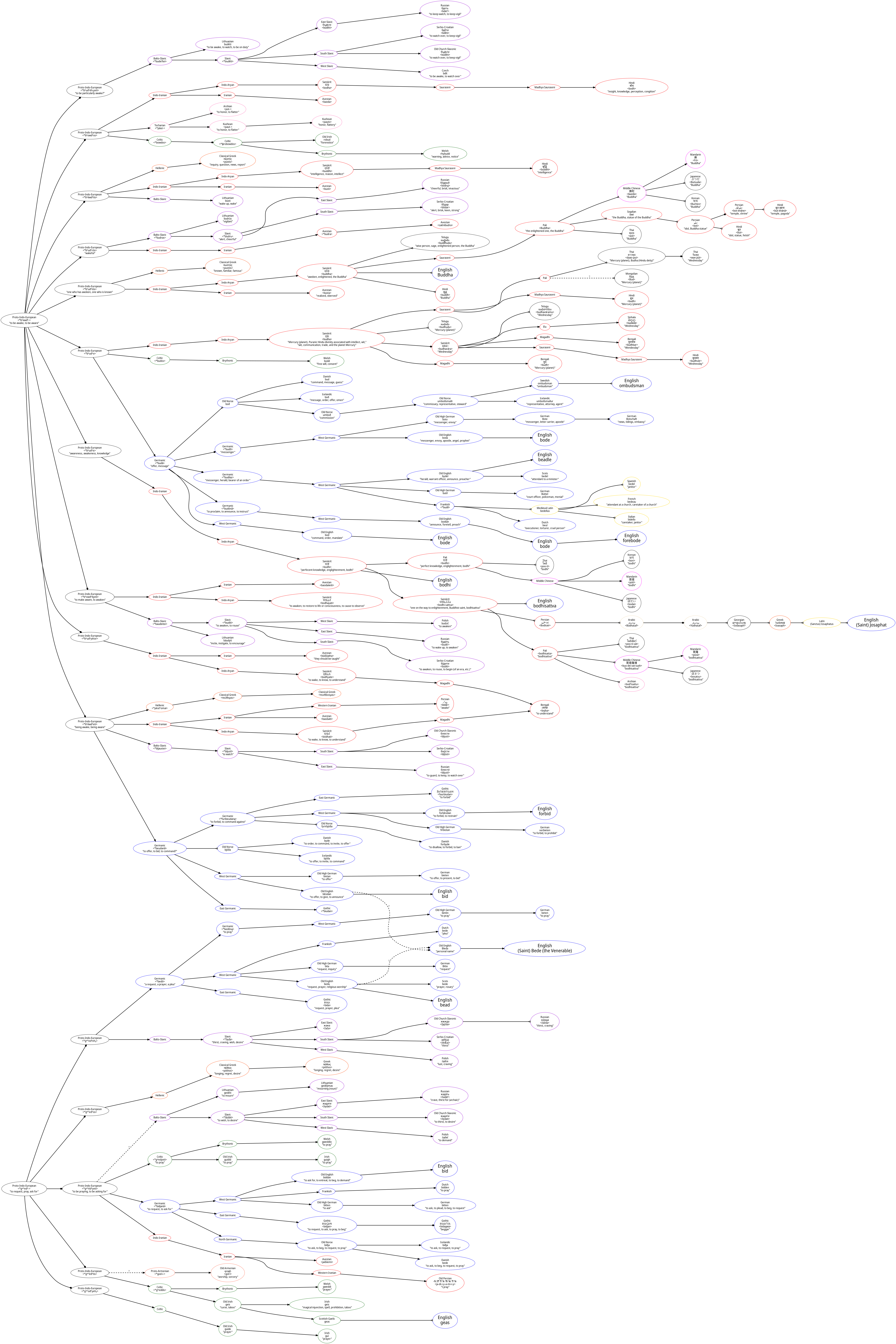
Collected English words
bodhi, bid, bode, forbid, (Saint) Josaphat, bodhisattva, Buddha, (Saint) Bede (the Venerable), bode, forebode, bid, ombudsman, bead, geas, bode, beadle
Footnotes
-
^
Old English bēodan, "to offer" and Old English bidda, "to ask for" got confused in Middle English and merge into Modern English bid, resulting in a very confusing pair of homonym-antonyms from different PIE roots.
-
^
English bead meant "prayer", then "prayer with a rosary" -> "a rosary" -> "rosary beads" -> "beads in general"
-
^
"But not till the mid-nineteenth century was it recognised that, in Josaphat, the Buddha had been venerated as a Christian saint for about a thousand years." - David M. Lang's 1967 introduction to Woodward and Mattingly's 1914 translation of Barlaam and Ioasaph
-
^
India and Rome had a shared inheritance of Hellenistic astrology, after the conquests of Alexander the Great expanded and transformed the Persian sphere of influence. When the astrological 7-day week of planetary hours began to replace the 8-day nundinal cycle (see last week) over the first few centuries CE, the idea spread widely through the Hellenistic world and beyond within a few hundred years.