June theme: Pride In Words 🏳️🌈
Teaser
Full Text
-
Proto-Indo-European *ǵʰeh₁- to go, to walk, to leave
-
Proto-Indo-European *ǵʰh₁yeti ye- present verb
-
Germanic *gāną to go, to walk
-
East Germanic
- Crimean Gothic geen to go
-
North Germanic
-
Old Norse gá
- Danish gå to go, to walk
-
-
West Germanic *gān to go
-
Old English gān to go, to walk, to enter
- English go
- Scots gae to go
-
Frankish *gān
- Dutch gaan to go, to lead, to proceed
-
Old High German gān
- German gehen to go, walk
- Yiddish גיין geyn to go, to walk
-
-
Germanic *ganhuz fast, quick
-
East Germanic
-
Gothic 𐌲𐌰𐌷𐌴𐌹𐍃 gaheis
-
Old Occitan gai
-
Old French gai
- French gai cheerful, merry
- English gay
- Italian gaio cheerful, happy, bright color
-
-
-
-
West Germanic *gą̄hī
-
Old High German gāhi
- German jäh abrupt, precipitous
- Yiddish גיך gikh fast
-
Frankish *gāhi
- Dutch gauw quickly, soon
-
Old French jai jay (bird)
- French geai jay (bird)
- English jay
-
-
-
-
-
Proto-Indo-European *ǵʰéǵʰeh₁ti to leave, to abandon
-
Indo-Iranian *ĵʰáĵʰaHti
-
Indo-Aryan *ȷ́áźʰaHti
- Sanskrit 𑀚𑀳𑀸𑀢𑀺 jáhāti to renounce, to abandon, to ignore, to shun
-
Iranian *jájaHti
- Avestan 𐬰𐬀𐬰𐬁𐬌𐬙𐬌 zazāiti to overtake, to win, to leave behind
-
-
-
Proto-Indo-European *ǵʰeh₁ros left, remnant
-
Hellenic
-
Classical Greek χήρα khéra widow
- Greek χήρα chíra widow, relict
- Laz შირა şira widow
-
-
Italic *xeros
-
Latin heres heir
-
Central Romance
- Italian erede heir
-
Western Romance
-
Old French eir
-
Anglo-Norman heir
- English heir
- Irish oidhre heir
-
-
-
Latin hereditarius hereditary, inherited
-
Western Romance
-
French héritier heir
-
French héritage heritage, inheritance, legacy
- English heritage
-
- Spanish heredero heir
-
- English hereditary
- French héréditaire hereditary
- Italian ereditario hereditary
- Spanish hereditario hereditary
-
-
Latin hereditare to inherit
-
Central Romance
- Italian ereditare to inherit
-
Western Romance
- French hériter to inherit
- Spanish heredar to inherit
-
Latin inhereditare to appoint as heir
-
Western Romance
-
Old French enheriter
- English inherit
-
-
-
-
-
-
-
Proto-Indo-European *ǵʰengʰ- to go, walk, stride, step intensive form of *ǵʰeh₁-
-
Proto-Indo-European *ǵʰengʰti primary verb
-
Balto-Slavic
-
East Baltic
- Lithuanian žeñgti to stride
-
-
Indo-Iranian
-
Indo-Aryan
- Sanskrit 𑀚𑀁𑀳𑀢𑀺 jaṃhati to move quickly, sprawl
-
-
Germanic *ganganą to go, walk, step
-
East Germanic
- Gothic 𐌲𐌰𐌲𐌲𐌰𐌽 gaggan to go
-
North Germanic
-
Old Norse ganga to go, to walk
- Icelandic ganga to walk, to operate (of a machine)
- Old Norse Gangleri divine epithet: Walking-Weary (Odin)
-
-
West Germanic *gangan
-
Old English gangan to go, to walk
-
English gang
- English gangling
- English gangly
- English gangway
- English gangplank
-
-
Old High German gangan
- German (ge-)gangen went past participle of gehen
-
-
Germanic *gangaz pace, step, walk, path
-
North Germanic
-
Old Norse gangr
- Icelandic gangur the act of walking, movement, action, hallway
-
Finnic *kangas
- Finnish kangas coniferous, boreal forest that is easily walked through; the kind of soil that such a forest grows on
-
-
West Germanic *gang
-
Old English gang a going, act of walking, path, gait, toilet
-
English gang [1]
- Italian ghenga gang
- Japanese ギャング gyangu gang
- Korean 갱 gaeng gang
- Māori kēnga gang
- Portuguese gangue gang
- English gank
-
-
Old High German gang path, journey, a going
-
German Gang walk, course, passageway, mineral vein or seam
-
French gangue the worthless rock or vein matter in which valuable metals or minerals occur
- English gangue
-
-
Old High German Wolfgang personal name: Wolf-Journey
-
Middle High German Wolfgang
-
German Wolfgang
- English Wolfgang
-
-
-
-
-
-
-
-
Proto-Indo-European *ǵʰongʰis
-
Germanic *gangiz passable, going, able to go
-
Old Norse gengr
-
Icelandic gengur passable, able to walk
- Icelandic skipgengur navigable "ship-passable"
-
Swedish gäng(e) gang, team, group
- Finnish jengi gang
-
-
-
-
-
Visual
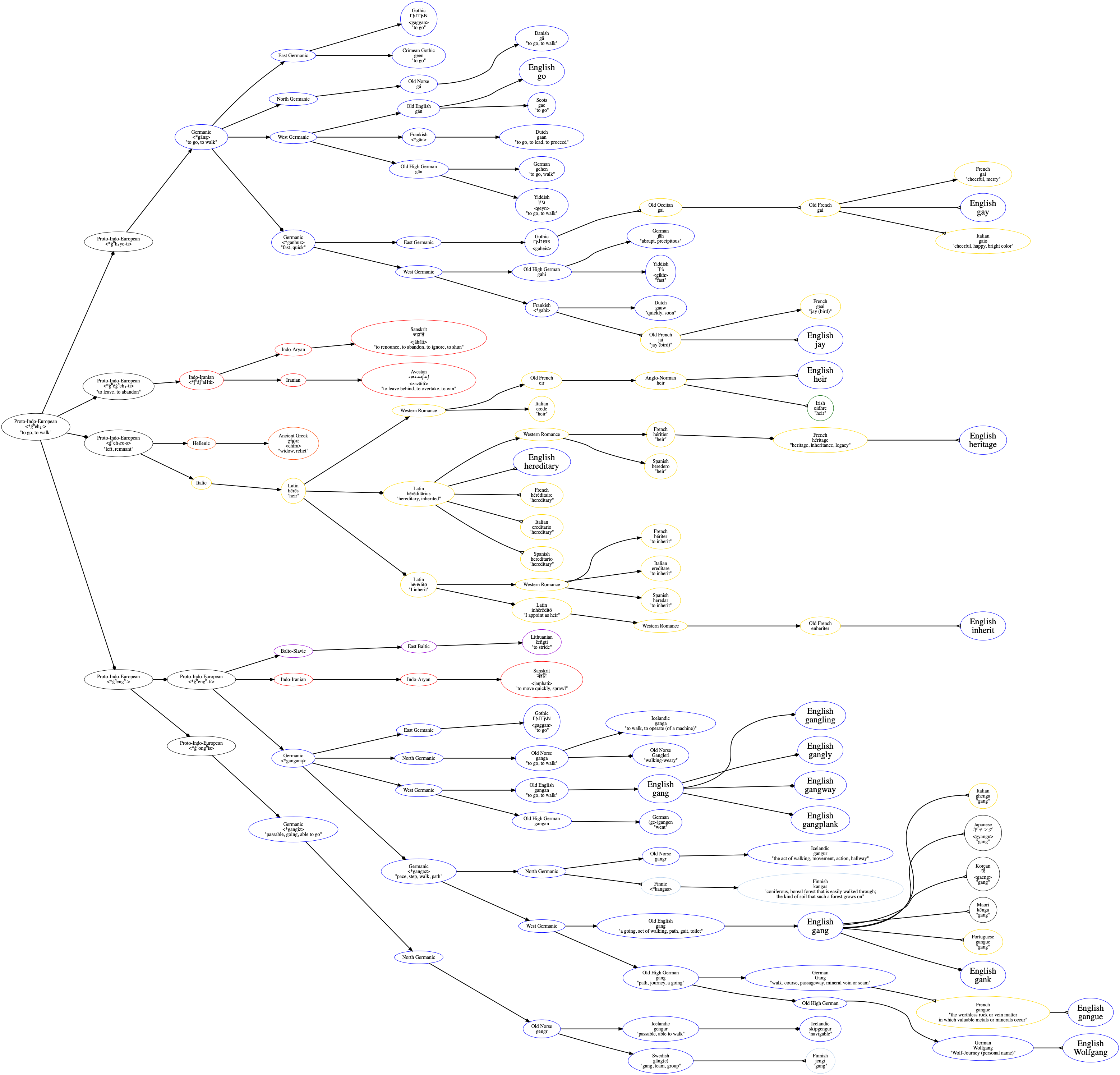
Collected English words
go, gay, jay, heir, heritage, hereditary, inherit, gang, gangling, gangly, gangway, gangplank, gang, gank, gangue, Wolfgang
Footnotes
-
^
The semantic shift of English gang goes something like: "to go, to walk"/"a going, a journey" -> "a group of people travelling together" -> "a group of people acting towards a common goal" -> modern meanings.